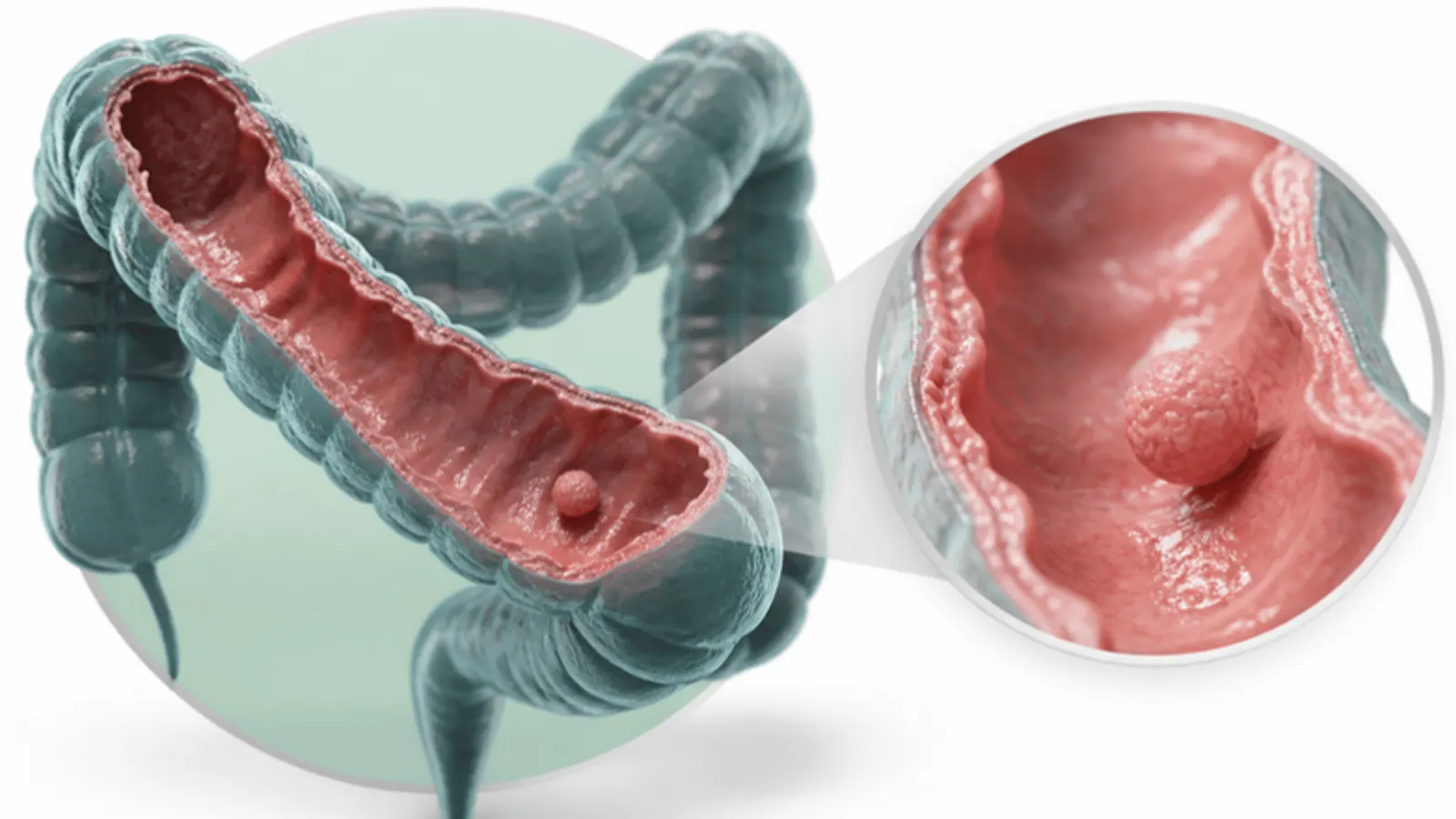
I have lost count of the number of patients who told me, afterwards, that they wished they had not spent weeks dreading it. A colonoscopy is a 20 to 30 minute procedure. The preparation the day before is the worst part. And it is the only test that can both find colorectal cancer early and prevent it by removing polyps before they turn into cancer. Here is exactly what to expect.
Why you might need one
- Blood in the stool, or anaemia with no other explanation
- A change in bowel habit lasting more than a few weeks
- Screening — from age 45–50 depending on guideline, or 40 with a family history of colorectal cancer or polyps
- Surveillance after previous polyps or cancer
- Ulcerative colitis or Crohn's disease — to assess activity and screen for cancer
- An abnormal stool test (FIT) or CT scan
The day before — bowel preparation
The colon must be completely clean so that I can see the lining. You will be given a laxative solution to drink in the afternoon and evening, and asked to stick to clear liquids — water, clear soup, tea without milk, apple juice — from lunchtime. The laxative works within an hour or two and you will go to the toilet many times. It is unpleasant but not painful, and it is over by bedtime. Stay near a bathroom, drink plenty of fluids, and use a barrier cream to protect the skin. Honest tip: this is the part everyone remembers, and it is genuinely the hardest part.
On the day
You arrive with an empty stomach. A nurse checks your blood pressure and places a small cannula in a vein in your hand. You change into a gown. In the endoscopy room you lie on your left side with knees drawn up. Sedation is given through the cannula — most patients are drowsy and relaxed, many doze, and most remember little or nothing of the procedure. Oxygen and monitoring are attached throughout.
The procedure itself
The colonoscope is a flexible tube about as thick as a finger, with a camera and light at the tip. It is passed gently through the anus and advanced along the whole colon — about 1.5 metres — to where it joins the small intestine. Air or carbon dioxide is used to open the bowel so the lining can be seen. You may feel some bloating or pressure, particularly at the bends; this is brief. The withdrawal, when I carefully examine every fold, takes 6 to 10 minutes.
If I find a polyp, I remove it there and then with a wire snare through the scope — not felt, because the colon lining has no pain nerves. If I see anything suspicious, I take a biopsy. If you have bleeding piles, I can band them in the same session.
Afterwards
You rest in recovery for 30 to 60 minutes while the sedation wears off. You may pass some wind — this is the air used during the procedure and is expected. You can eat normally. Because of the sedation you must not drive, operate machinery, or sign important documents for 24 hours, so bring someone to take you home. I will speak to you before you leave about what I found. Biopsy results take about a week.
Risks
Colonoscopy is very safe. Serious complications — bleeding after polyp removal, or a perforation of the bowel wall — occur in roughly 1 to 3 per 1,000 procedures and are more likely when large polyps are removed. These are treatable. The risk of not having a colonoscopy when it is indicated is far greater.
Questions
Treatment information
General & GI SurgerySources
- Gupta S et al. (US Multi-Society Task Force). Recommendations for follow-up after colonoscopy and polypectomy. Gastroenterology 2020;158:1131–1153.
- Rutter MD et al. BSG/ACPGBI/PHE post-polypectomy and post-colorectal cancer resection surveillance guidelines. Gut 2020;69:201–223.
- Rex DK et al. Quality indicators for colonoscopy. Gastrointest Endosc 2015;81:31–53 (withdrawal time ≥ 6 min).
- Reumkens A et al. Post-colonoscopy complications: a systematic review, time trends, and meta-analysis of population-based studies. Am J Gastroenterol 2016;111:1092–1101.
Dr. Wasif Raza
MBBS, MS, MCh (Colon & Rectal Surgery, UK), FRCS (UK), FACS (USA). Colon & Rectal Cancer, Laparoscopic & Robotic Surgery, and General Surgery Specialist, Apollo Medics Superspeciality Hospitals, Lucknow. Reg. NMC 08-33828 · GMC 7555694.
Appointments: +91 92780 72150. This content is for information only and is not a substitute for consultation. Individual results vary.