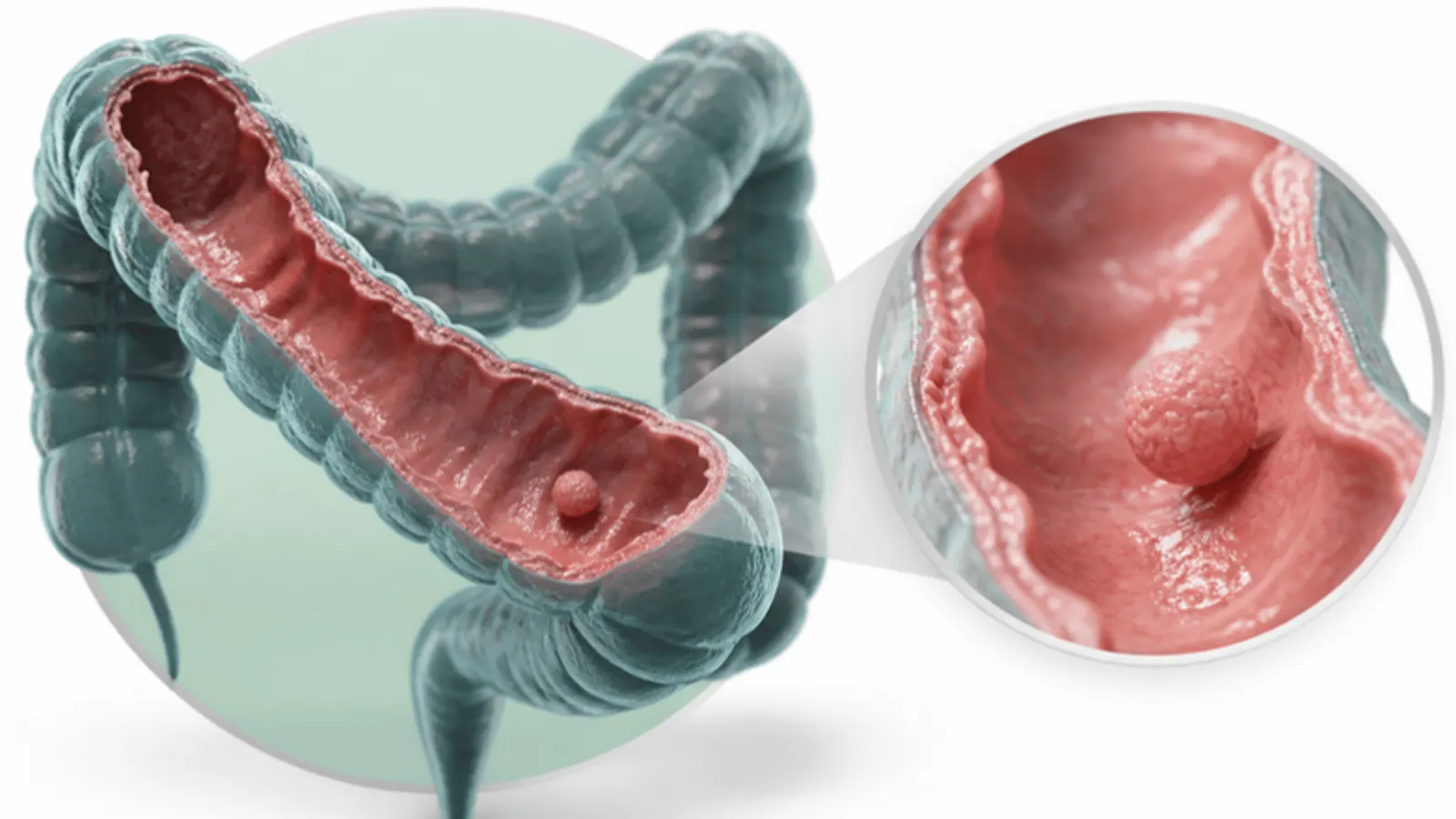
Colorectal cancer is the third most common cancer in the world and is rising steadily in India — including, worryingly, among people in their 30s and 40s. The good news is unusually good: caught at Stage 1, more than 90% of patients are cured. Caught at Stage 4, far fewer are. The difference is almost entirely about how early it is found. These are the signs that should send you to a specialist.
1. Blood in or on the stool
The most common sign — and the most commonly dismissed as piles. Bright red blood on the paper is often piles or a fissure. Blood mixed into the stool, or dark blood, is more concerning. Any bleeding lasting more than two weeks, or any bleeding at all after 45, needs a proper look.
2. A change in bowel habit that doesn't settle
Everyone has the occasional upset stomach. What matters is a persistent change — new constipation, new diarrhoea, alternating between the two, or stools that have become noticeably narrower — lasting more than two to three weeks without an obvious cause like a change in diet or medication.
3. Feeling that the bowel never empties completely
A tumour in the rectum can create a constant sensation of needing to go, or of not having finished, even straight after passing stool. Doctors call this tenesmus. It is one of the most specific signs of rectal cancer and should never be ignored.
4. Unexplained weight loss
Losing 4–5 kg or more over a few months without trying — without dieting, without a new exercise routine — is a red flag for many cancers, including colorectal. Combined with any bowel symptom, it needs urgent investigation.
5. Persistent tiredness, breathlessness, or pale skin
A colon tumour — especially on the right side — can bleed slowly for months without any visible blood in the stool. The result is iron- deficiency anaemia. If a blood test shows low haemoglobin and low iron in a man of any age, or a woman after menopause, the colon must be examined. Anaemia is often the only sign of right-sided colon cancer.
6. Abdominal pain, cramping, or bloating that keeps coming back
Vague, recurring abdominal discomfort — particularly if it is new, if it is on one side, or if it comes with a change in bowel habit — can indicate a tumour partially blocking the bowel. Sudden severe pain with vomiting and inability to pass wind or stool may mean a complete obstruction, which is an emergency.
7. A lump in the abdomen or rectum
Less common, but a tumour can sometimes be felt — by the patient as a firm area in the abdomen, or by the doctor on rectal examination. Any new lump deserves assessment.
Who should be screened even without symptoms
Colorectal cancer develops from polyps over roughly 10 years, and polyps cause no symptoms. A screening colonoscopy finds and removes them before they turn into cancer — which is prevention, not just early detection. You should have one if:
- You are 50 or older (45 in many international guidelines now)
- A parent, sibling or child had colorectal cancer or polyps — start at 40, or 10 years before their age at diagnosis
- You have ulcerative colitis or Crohn's disease for more than 8 years
- You have a known genetic syndrome such as Lynch syndrome or FAP
What to do
If you have any of the seven signs, see a colorectal specialist rather than waiting. The assessment is quick, colonoscopy is far easier than its reputation, and the most likely outcome is reassurance. If something is found, finding it now rather than in a year is the single most important factor in your outcome.
Questions
Treatment information
Colon Cancer SurgerySources
- Bray F et al. Global cancer statistics 2022: GLOBOCAN estimates. CA Cancer J Clin 2024;74:229–263.
- US Preventive Services Task Force. Screening for Colorectal Cancer: Recommendation Statement. JAMA 2021;325:1965–1977 (screening from age 45).
- NICE Guideline NG12 — Suspected cancer: recognition and referral (updated 2023).
- Snook J et al. BSG guidelines for the management of iron deficiency anaemia in adults. Gut 2021;70:2030–2051.
- SEER Cancer Stat Facts: Colorectal Cancer. National Cancer Institute (seer.cancer.gov) — stage-specific survival.

Dr. Wasif Raza
MBBS, MS, MCh (Colon & Rectal Surgery, UK), FRCS (UK), FACS (USA). Colon & Rectal Cancer, Laparoscopic & Robotic Surgery, and General Surgery Specialist, Apollo Medics Superspeciality Hospitals, Lucknow. Reg. NMC 08-33828 · GMC 7555694.
Appointments: +91 92780 72150. This content is for information only and is not a substitute for consultation. Individual results vary.