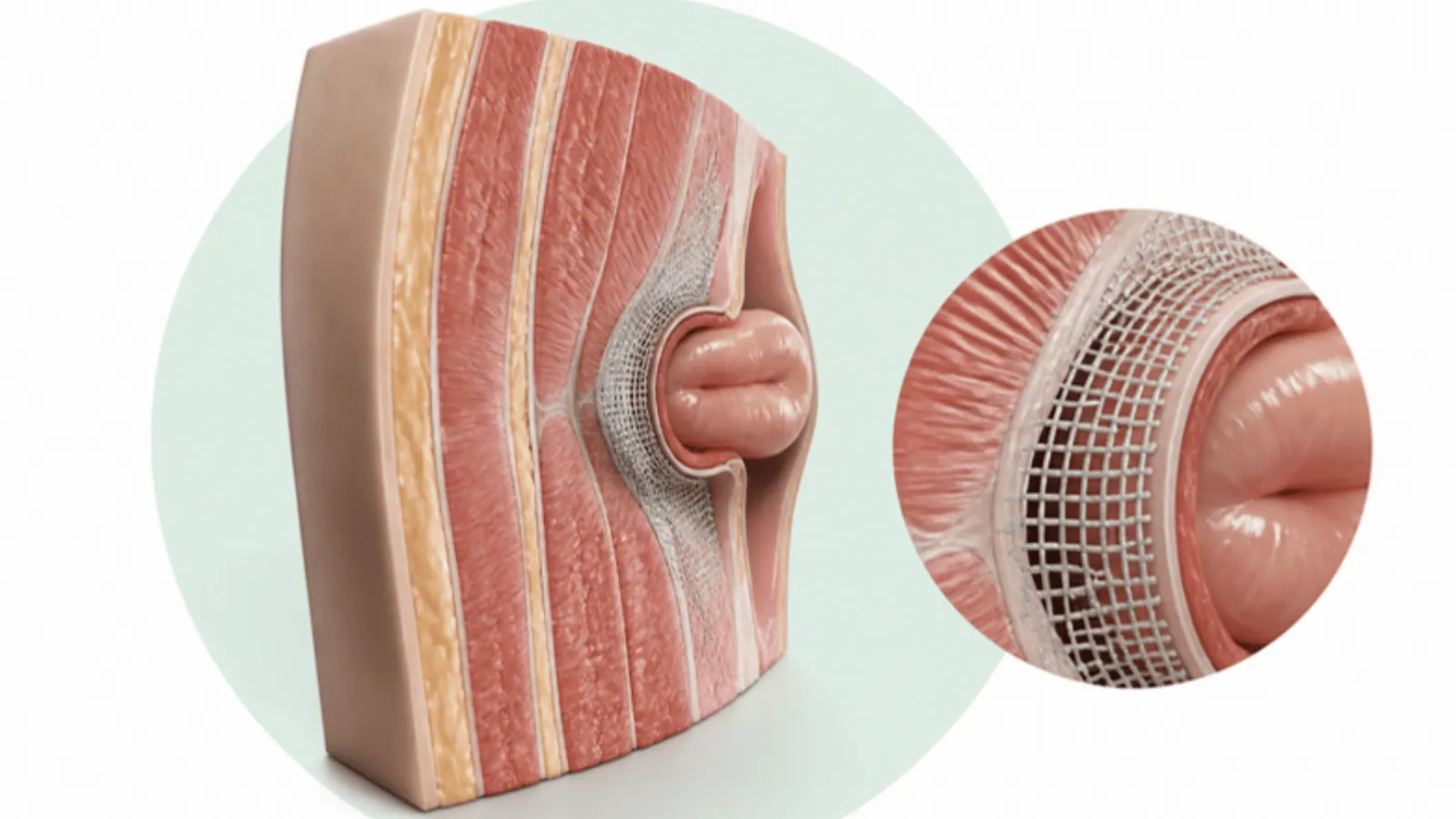
Types of hernia treated
- Inguinal — groin; most common; may be bilateral.
- Umbilical — at the navel; after pregnancy or weight gain.
- Incisional — through a previous surgical scar.
- Ventral / epigastric — midline above the navel.
- Femoral — below the groin crease; higher strangulation risk.
- Recurrent — returned after previous repair; needs an experienced surgeon and usually a laparoscopic approach from a fresh plane.
Symptoms
- A lump that appears on standing, coughing or lifting, and disappears lying down
- Dragging discomfort or dull ache
- Pain worse with exertion
Emergency: sudden severe pain, hard tender lump that won't go back, vomiting — go to hospital immediately.
Surgery options
01
Laparoscopic repair — TEP and TAPP
Three small incisions, mesh placed behind the muscle wall. Less pain and faster recovery than open repair; both sides repaired in one sitting for bilateral hernias. TEP is Dr. Raza's preferred approach for inguinal hernias.
02
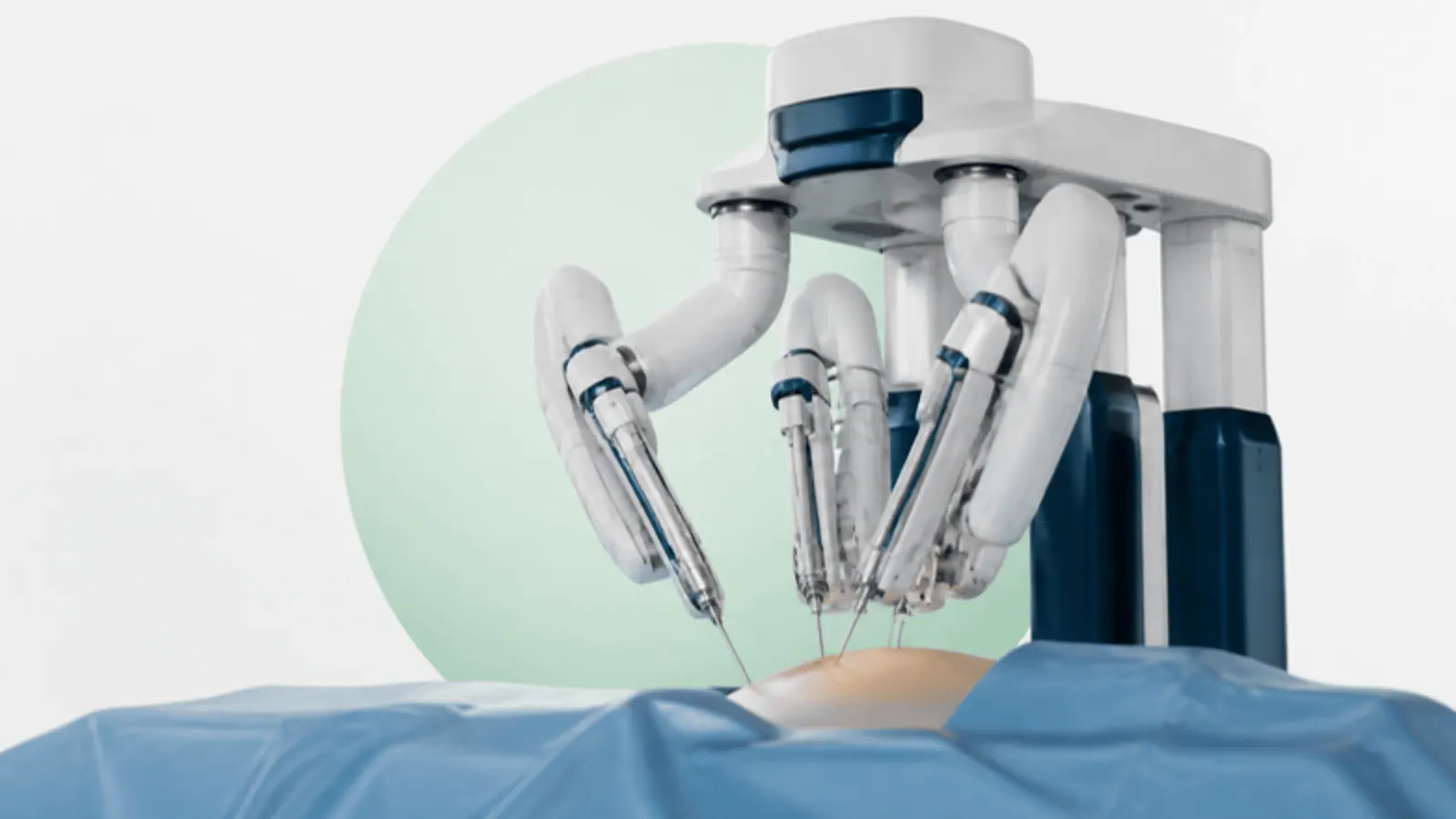
Robotic hernia repair (da Vinci Xi)
Dr. Raza performs robotic hernia surgery at Apollo Medics — particularly useful for complex incisional, ventral and recurrent hernias where precise mesh placement and suturing matter most.
03
Open mesh repair
For some very large hernias or where previous surgery makes keyhole access unsafe.
Recovery
| Laparoscopic / Robotic | Open | |
|---|---|---|
| Hospital stay | Daycare or 1 night | 1–2 nights |
| Light work | 5–7 days | 10–14 days |
| Heavy lifting | 3–4 weeks | 6 weeks |
Open vs keyhole — drag to compare
Illustrative only; your surgeon decides the approach. Individual results vary.Keyhole / robotic
Open surgery
- Incision3–5 cuts of 5–12 mm
- Hospital stay1–3 days
- Return to workWithin days
- PainLow
Individual results vary. Book a consultation: +91 92780 72150
Recovery planner
When can I…? — Laparoscopic hernia repair
- Going home16 Nov – 17 Nov(day 0–1)
- Light work21 Nov – 23 Nov(day 5–7)
- Heavy lifting7 Dec – 14 Dec(day 21–28)
Typical ranges from this page's information, shown as dates for convenience. Dr. Raza will confirm your own plan. Individual results vary.
हर्निया का इलाज — लखनऊ में लेप्रोस्कोपिक और रोबोटिक हर्निया सर्जरी। Dr. Wasif Raza, Apollo Medics, लखनऊ: +91 92780 72150
Questions patients ask
No. A hernia belt only hides the bulge. Surgery is the only cure.
This content is for information only and is not a substitute for consultation. Individual results vary. Reviewed by Dr. Wasif Raza, Apollo Medics Superspeciality Hospitals, Lucknow. Home · Contact