Symptoms
- A recurring boil or swelling near the anus
- Pus or blood-stained discharge
- Pain, especially sitting or during stool
- Skin irritation
- Fever if an abscess forms
Why fistula surgery needs a specialist
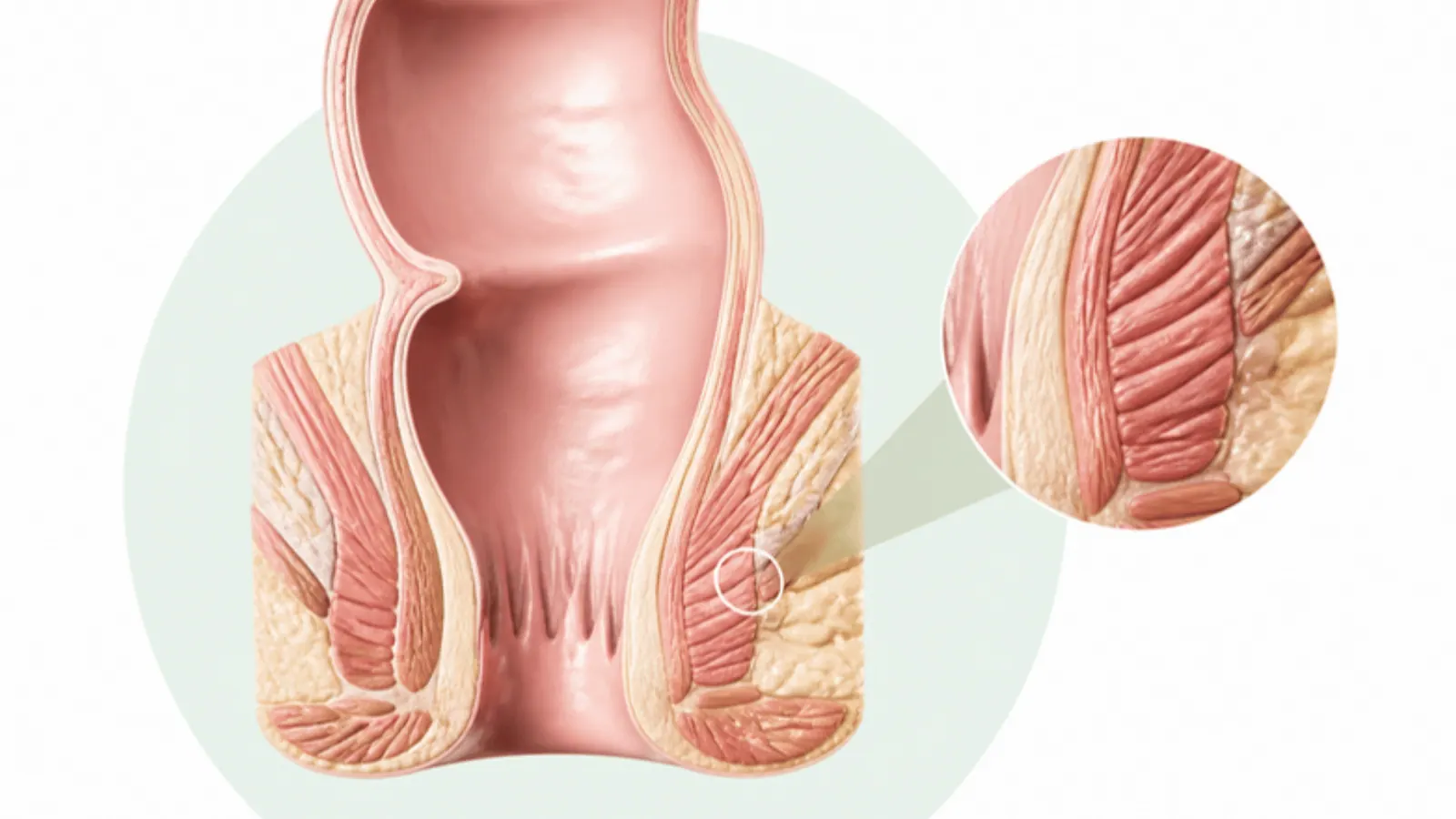
The tract passes through the anal sphincter muscles. Cutting too much causes incontinence; too little causes recurrence. Dr. Raza uses MRI fistulogram to map complex tracts before surgery and selects the technique that balances cure with safety.
Types
Simple (low) — crosses little muscle; cured by fistulotomy. Complex (high) — crosses significant muscle, has branches, or follows Crohn's; needs sphincter-preserving techniques and sometimes sphincter repair.
Surgical options
Fistulotomy
Tract laid open; over 95% cure for simple fistulas.
Seton
Soft thread for drainage and controlled healing; complex fistulas or first stage.
LIFT
Tract tied off between the sphincter muscles, preserving them fully; Dr. Raza's preferred technique for many complex fistulas.
Advancement flap
Internal opening covered with healthy tissue.
VAAFT / laser (FiLaC)
Minimally invasive closure from inside, no muscle cut.
Plug / glue
Selected cases.
Recovery
Day-care or one night. Daily wound care and sitz baths. Desk work in 3–7 days. Complete healing 4–8 weeks. Individual results vary.
Book a consultation: +91 92780 72150
Recovery planner
When can I…? — Anal fistula surgery
- Desk work19 Nov – 23 Nov(day 3–7)
- Complete healing14 Dec – 11 Jan(day 28–56)
Typical ranges from this page's information, shown as dates for convenience. Dr. Raza will confirm your own plan. Individual results vary.