"Should I have robotic surgery?" is now one of the most common questions I am asked. The honest answer is: sometimes yes, often it makes no difference, and the surgeon matters far more than the machine. Here is what each actually involves, and how I decide.
What they have in common
Both are forms of minimally invasive surgery. Instead of one long incision, the operation is done through several small ports of 5 to 12 mm. A camera gives a magnified view inside the abdomen, and long thin instruments do the work. Compared with open surgery, both give less pain, lower infection risk, shorter hospital stays, smaller scars, and a faster return to normal life. For cancer, both give the same cure rates as open surgery — this has been proven in large international trials.
What laparoscopic surgery is
The surgeon stands at the operating table, holding the instruments directly, and watches a high-definition 2D screen. The instruments are straight and pivot at the port site. It is the workhorse of modern abdominal surgery — gallbladder, appendix, hernia, colon resection — and in experienced hands it is fast, safe, and excellent.
What robotic surgery is
The same ports and the same operation, but the instruments are held by robotic arms. The surgeon sits at a console a few feet away, looking into a 3D high-definition viewer, and controls the arms with hand and foot controls. The instruments have "wrists" that rotate 540 degrees — more than a human wrist — and the system filters out hand tremor. It is important to understand that the robot does nothing on its own. Every movement is the surgeon's.
Where robotic surgery has a real advantage
- Deep in the pelvis — rectal cancer surgery, where the space is narrow, bony, and surrounded by nerves. The 3D view and wristed instruments make precise dissection easier.
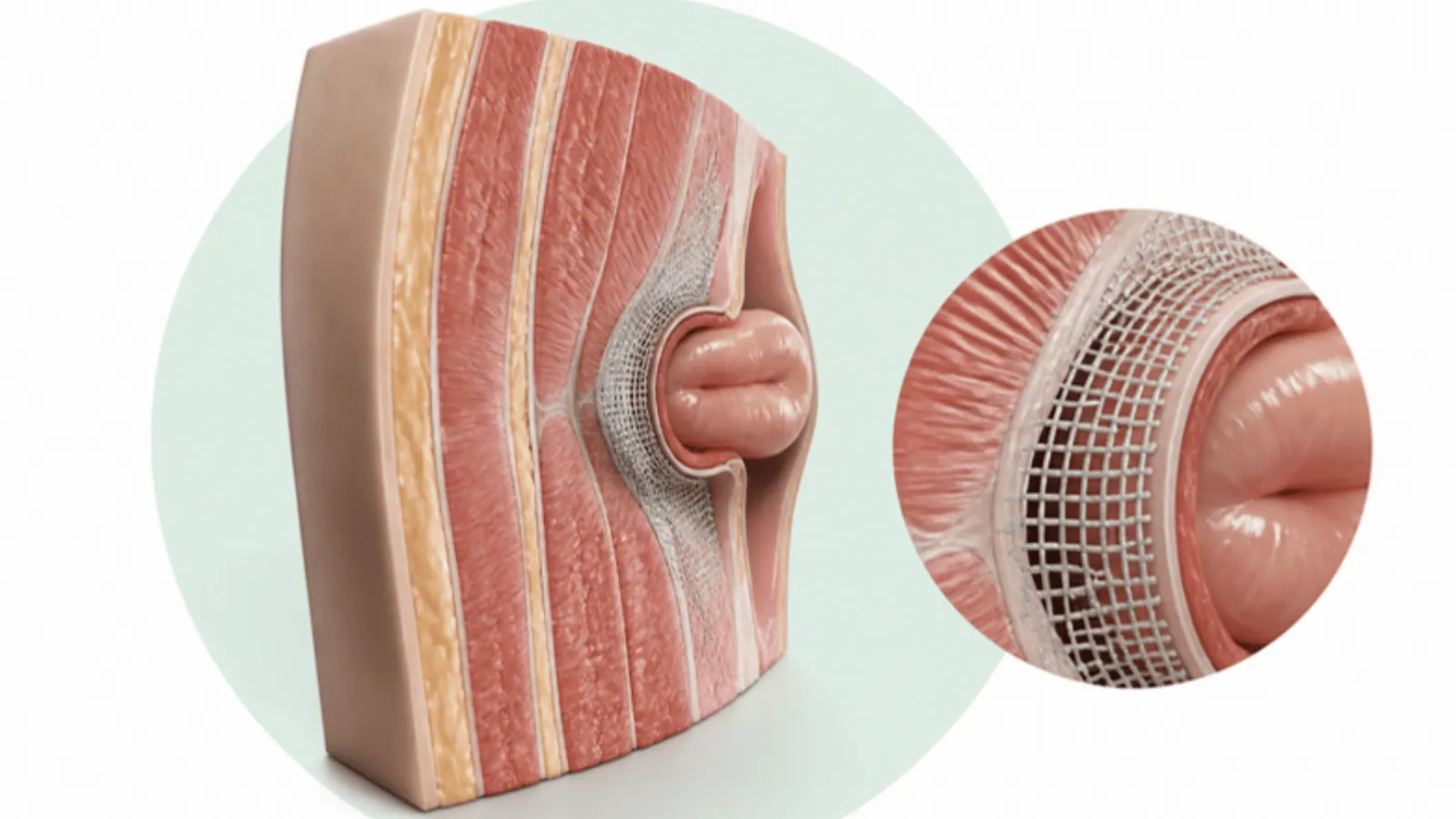
- Complex or recurrent hernias — where fine suturing of mesh in awkward positions is needed.
- Obese patients — where a thick abdominal wall makes straight laparoscopic instruments harder to manoeuvre.
Where it makes little difference
Gallbladder removal, appendicectomy, straightforward inguinal hernia, and most colon resections are done superbly laparoscopically. Robotic surgery in these cases takes longer to set up and costs more without a measurable benefit to the patient.
Cost and time
Robotic surgery is more expensive — the equipment and consumables cost more. Operating time is often longer. Hospital stay and recovery are similar to laparoscopic. For an operation where the robot gives a real advantage, this is money well spent. For one where it doesn't, it isn't.
What matters more than the technology
A surgeon who does a procedure regularly, with good outcomes, using the approach they are most skilled in, will give you a better result than an unfamiliar surgeon with the newest machine. Ask your surgeon: how many of these do you do a year, which approach do you recommend for me, and why.
| Laparoscopic | Robotic | |
|---|---|---|
| Incisions | 3–5 small ports | 3–5 small ports |
| Vision | 2D HD | 3D HD, magnified |
| Instrument movement | Straight, pivot at port | Wristed, 540° |
| Best for | Most routine abdominal surgery | Deep pelvis, complex hernia, obese patients |
| Cost | Lower | Higher |
| Cancer outcomes | Equal to open | Equal to open |
Questions
Treatment information
Laparoscopic & Robotic SurgerySources
- Jayne D et al. (ROLARR). Effect of robotic-assisted vs conventional laparoscopic surgery on risk of conversion to open laparotomy among patients undergoing resection for rectal cancer. JAMA 2017;318:1569–1580.
- Bonjer HJ et al. (COLOR II). N Engl J Med 2015;372:1324–1332.
- Guillou PJ et al. (MRC CLASICC). Short-term endpoints of conventional versus laparoscopic-assisted surgery in patients with colorectal cancer. Lancet 2005;365:1718–1726.
- Clinical Outcomes of Surgical Therapy (COST) Study Group. A comparison of laparoscopically assisted and open colectomy for colon cancer. N Engl J Med 2004;350:2050–2059.
- Fleshman J et al. (ACOSOG Z6051). Effect of laparoscopic-assisted resection vs open resection of stage II or III rectal cancer on pathologic outcomes. JAMA 2015;314:1346–1355.

Dr. Wasif Raza
MBBS, MS, MCh (Colon & Rectal Surgery, UK), FRCS (UK), FACS (USA). Colon & Rectal Cancer, Laparoscopic & Robotic Surgery, and General Surgery Specialist, Apollo Medics Superspeciality Hospitals, Lucknow. Reg. NMC 08-33828 · GMC 7555694.
Appointments: +91 92780 72150. This content is for information only and is not a substitute for consultation. Individual results vary.