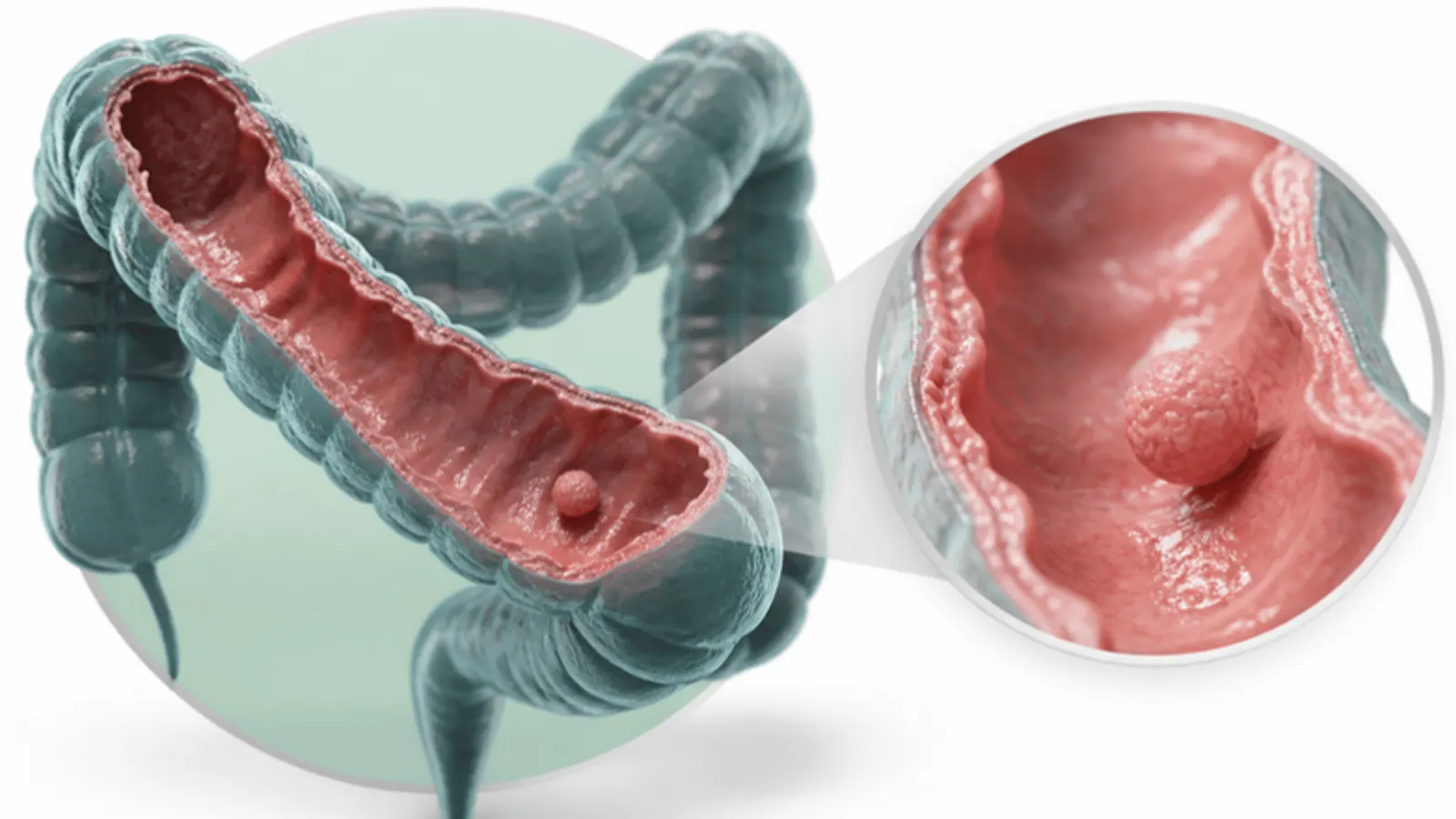
Of all the questions I am asked by newly diagnosed rectal cancer patients, this is the one asked first, most anxiously, and most often. Some patients have delayed treatment because of it. So let me answer it directly: most rectal cancer patients do not end up with a permanent bag. But some do, and some need a temporary one. Here is how it works and how we decide.
What a stoma actually is
A stoma is an opening on the abdomen through which the bowel is brought to the surface, so that stool passes into a bag rather than through the anus. A colostomy uses the colon; an ileostomy uses the small intestine. Modern bags are flat, odour-proof, discreet under clothing, and changed by the patient. Hundreds of thousands of people worldwide live full, active lives with one.
Temporary stoma — the common one
When the rectum is removed and the colon is joined to the remaining rectum or anus, that join is low in the pelvis and takes time to heal. To protect it, we often create a temporary ileostomy upstream, so stool is diverted while the join heals. This is reversed in a second, smaller operation after 2 to 6 months. The patient then passes stool normally. Roughly half of patients having sphincter- saving rectal surgery will have a temporary stoma. It is a safety measure, not a failure.
Permanent stoma — when it is needed
A permanent colostomy is needed when the tumour is so low that it involves the anal sphincter muscles themselves. If the sphincter is removed, there is no way to control bowel movements, so the colon is brought out as a permanent stoma. This operation is called abdominoperineal resection, or APR. In well-selected cases it is the operation that gives the best chance of cure, and it is better to have a stoma and be cancer-free than to save the sphincter and leave cancer behind.
How we decide — the MRI
The single most important test is the MRI of the pelvis. It shows, in millimetres, how far the tumour is from the sphincter and whether the sphincter muscles are involved. A tumour 5 cm or more from the anal verge can almost always be treated with sphincter-saving surgery. Between 2 and 5 cm it depends on the MRI findings, the response to chemoradiotherapy, and the surgeon's technique. Below 2 cm, or with sphincter involvement, a permanent stoma is usually necessary.
How sphincter-saving surgery has improved
Thirty years ago, a tumour within 5 cm of the anus almost always meant a permanent bag. Three things changed that:
- Chemoradiotherapy before surgery shrinks the tumour, often pulling it away from the sphincter
- Total mesorectal excision (TME) allows the surgeon to dissect precisely along natural tissue planes right down to the pelvic floor
- Laparoscopic and robotic approaches give a magnified view deep in the pelvis
Today, in specialist colorectal units, 80 to 90% of rectal cancer patients keep their sphincter.
Watch and Wait
A further option for a carefully selected minority: if the tumour disappears completely after chemoradiotherapy, surgery may be deferred under strict surveillance with regular MRI and endoscopy. If the tumour returns, surgery is done then. This avoids any stoma in patients who qualify — but it requires an experienced team and a committed patient.
Why the surgeon matters
The decision between sphincter-saving surgery and a permanent stoma depends on experience in low rectal dissection and on the MDT discussion. If you have been told a permanent bag is unavoidable, a second opinion from a colorectal specialist is reasonable to seek before surgery.
Questions
Treatment information
Rectal Cancer SurgerySources
- Heald RJ, Ryall RD. Lancet 1986;1:1479–1482 (total mesorectal excision).
- Glynne-Jones R et al. ESMO rectal cancer guidelines. Ann Oncol 2017;28(suppl 4):iv22–iv40.
- Habr-Gama A et al. Operative versus nonoperative treatment for stage 0 distal rectal cancer following chemoradiation therapy. Ann Surg 2004;240:711–718.
- van der Valk MJM et al. (International Watch & Wait Database). Long-term outcomes of clinical complete responders after neoadjuvant treatment for rectal cancer. Lancet 2018;391:2537–2545.
- Emmertsen KJ, Laurberg S. Low anterior resection syndrome score. Ann Surg 2012;255:922–928.

Dr. Wasif Raza
MBBS, MS, MCh (Colon & Rectal Surgery, UK), FRCS (UK), FACS (USA). Colon & Rectal Cancer, Laparoscopic & Robotic Surgery, and General Surgery Specialist, Apollo Medics Superspeciality Hospitals, Lucknow. Reg. NMC 08-33828 · GMC 7555694.
Appointments: +91 92780 72150. This content is for information only and is not a substitute for consultation. Individual results vary.