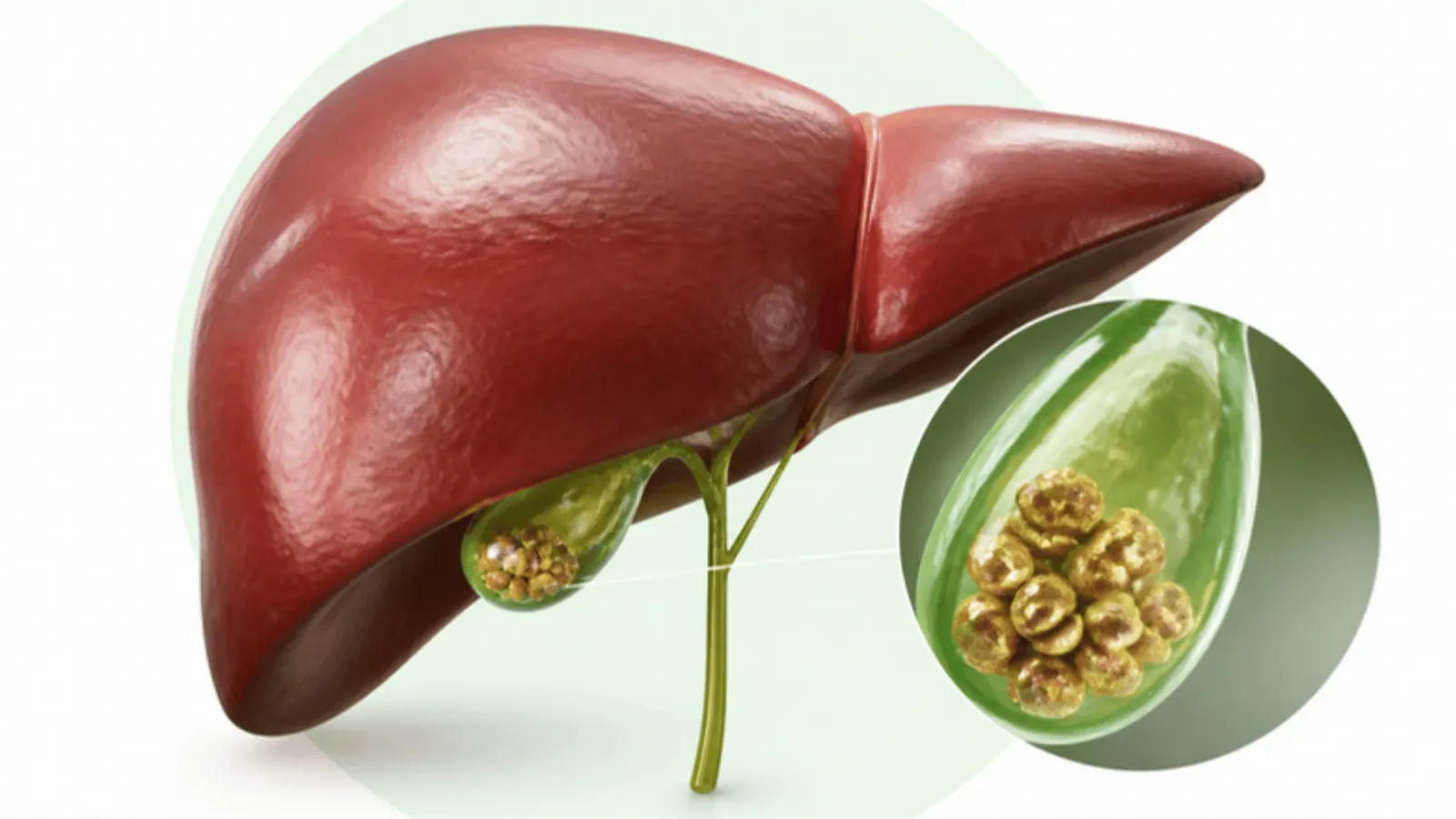
Gallstones are extremely common — perhaps one adult in ten has them, and in India they are especially frequent in women and in North India. Many are discovered by accident on an ultrasound done for something else. The patient is then told "you have stones in your gallbladder" and is left wondering whether they are sitting on a time bomb. The answer depends on one thing: are the stones causing symptoms?
Silent gallstones
If gallstones have never caused pain and were found incidentally, they are called asymptomatic or "silent". The majority of silent gallstones stay silent. Studies following such patients for years show only about 1 to 2% per year go on to develop symptoms. For most people with silent stones, surgery is not necessary. We simply note them and advise you what symptoms to watch for.
There are exceptions where surgery is advised even without symptoms: very large stones (over 3 cm), a "porcelain" calcified gallbladder, and gallbladder polyps of 1 cm or more. Some patients awaiting organ transplant are also advised surgery.
Symptomatic gallstones
Once a gallstone has caused pain — even once — the situation changes. The pain is called biliary colic: a severe, steady ache in the upper right abdomen or under the breastbone, often after a fatty meal, lasting from 30 minutes to several hours, sometimes radiating to the back or right shoulder, often with nausea. After a first attack, about 70% of patients will have another within two years, and each attack carries a risk of complication:
- Acute cholecystitis — the gallbladder becomes infected and inflamed; fever, constant pain, hospital admission
- Bile duct stones — a stone slips into the main bile duct, causing jaundice and requiring an ERCP procedure
- Gallstone pancreatitis — a stone blocks the pancreatic duct; a serious, sometimes life-threatening condition
For symptomatic gallstones, surgery is recommended — and sooner is better than later, because an operation on an inflamed, scarred gallbladder is more difficult than one on a quiet gallbladder.
Why not just remove the stones?
Because the gallbladder that formed them will form more. Removing the gallbladder removes the factory. You do not need a gallbladder — it only stores bile; the liver makes it, and after surgery bile simply flows straight into the intestine.
Why medicines don't work
Tablets that dissolve cholesterol stones exist, but they take 6 to 24 months, work only on small pure-cholesterol stones, and the stones return in half of patients within five years once the tablets stop. They have almost no role in modern practice. Shock-wave therapy (lithotripsy), used for kidney stones, is no longer used for gallstones because stones return.
What laparoscopic removal involves
Three or four small incisions. The gallbladder is freed and removed through one of the ports. Under general anaesthesia, 45 to 60 minutes. Most patients walk the same evening, eat the next morning, and go home within 24 hours. Light work within a week, normal activity in two. It is one of the safest and most frequently performed operations in the world.
Questions
Treatment information
Gallbladder Stone SurgerySources
- European Association for the Study of the Liver. EASL Clinical Practice Guidelines on the prevention, diagnosis and treatment of gallstones. J Hepatol 2016;65:146–181.
- NICE Clinical Guideline CG188 — Gallstone disease: diagnosis and management (2014).
- Gracie WA, Ransohoff DF. The natural history of silent gallstones: the innocent gallstone is not a myth. N Engl J Med 1982;307:798–800.
- SAGES. Guidelines for the clinical application of laparoscopic biliary tract surgery (2010).

Dr. Wasif Raza
MBBS, MS, MCh (Colon & Rectal Surgery, UK), FRCS (UK), FACS (USA). Colon & Rectal Cancer, Laparoscopic & Robotic Surgery, and General Surgery Specialist, Apollo Medics Superspeciality Hospitals, Lucknow. Reg. NMC 08-33828 · GMC 7555694.
Appointments: +91 92780 72150. This content is for information only and is not a substitute for consultation. Individual results vary.